
Back Pain & Sciatica Chiropractor in Colleyville, TX
Built Around What Your Nervous System Shows
Dr. Cameron Williams, DC
CLA INSiGHT Nervous System Scans
Colleyville, TX
Non-Invasive Assessment
What's Covered on This Page
When Back Pain Needs Emergency Care, Not a Chiropractic Visit
What to Expect During Your First Visit at Radiant Chiropractic in Colleyville
What's the difference between regular back pain and sciatica?
When should I skip the chiropractor and go straight to the ER for back pain?
What happens during my first visit for back pain or sciatica care?
How does a nervous system scan help figure out my treatment plan?
How soon will I notice improvement in my back pain or sciatica?
Sciatica Symptoms vs. Everyday Back Pain
Quick Summary: Regular back pain and sciatica are not the same condition, even though they can feel similar at first. Regular back pain usually stays in one place and eases with rest, while sciatica travels down the leg and often doesn't respond to rest alone. Knowing the difference helps determine the right approach to care.
Back pain and sciatica are often talked about as if they're the same thing, but they're not. Regular back pain tends to stay in one place. It can be dull, achy, or sharp depending on movement, and it typically eases within a few days with rest and gentle movement. A weekend spent on yard work or hauling something heavy is a common cause we see here in Colleyville.
Sciatica behaves differently. It starts in the lower back or hip, but it doesn't stay there. Patients often describe a burning or electric sensation that travels down through the glute, the back of the thigh, and sometimes all the way past the knee. That difference matters, because a nerve being irritated calls for a different approach than a sore muscle.
Numbness or tingling down one leg, not both
Pain that worsens with long stretches of sitting, like a commute from Colleyville into Fort Worth
Weakness in the leg or foot, tripping more than usual
Pain that extends below the knee, not just in the lower back
If your pain stays local and improves with rest, that's often a muscle or joint issue. If it travels down the leg and doesn't let up, that usually points to nerve involvement, which calls for a different kind of care. Sciatica can also show up during pregnancy, as the growing uterus places pressure on the pelvis, and our prenatal care page covers that specifically.
How Care Plans Are Built From Nervous System Scan Results
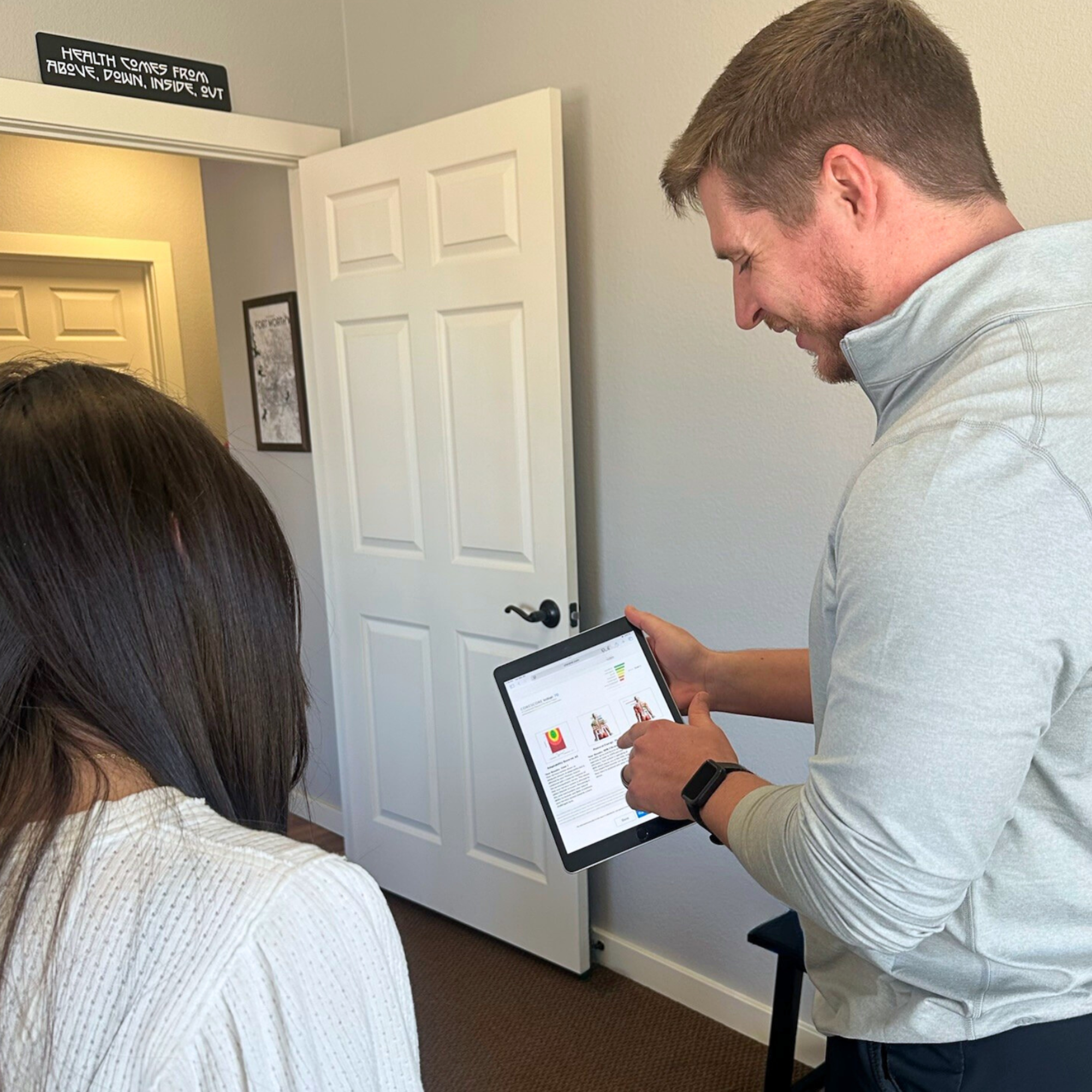
Before recommending any kind of care plan, we like to start with objective information rather than guesswork. The CLA INSiGHT scan is a non-invasive assessment that looks at how the spine and nervous system are functioning, not just where pain is being reported. Using surface EMG and thermal imaging, it can identify nerve interference, muscle tension patterns, and areas of stress along the spine that often correlate with sciatica and ongoing low back pain.
Once we've reviewed the scan alongside a physical exam and health history, we build a plan around what that specific person's body is showing us. Someone dealing with acute, disc-related nerve compression typically needs a different approach than someone managing years of postural strain from a desk job.
On the financial side, we operate as a cash-based practice. Most patients start with an initial exam that includes the consultation, scan, and a report of findings, followed by either per-visit care or a package rate. Because we're not billing insurance, visit frequency is guided by what the scan and your progress show, not by outside coverage limits.
Initial visit typically includes consultation, CLA INSiGHT scan, and a report of findings
Ongoing care is billed either per visit or through a package rate agreed upon upfront
Plan length is guided by re-scan results and symptom changes, not insurance visit caps
Patients know the full scope of their plan before starting care, avoiding surprise billing

When Back Pain Needs Emergency Care, Not a Chiropractic Visit
Most cases of back pain and sciatica respond well to conservative, chiropractic-led care. A small percentage of cases, however, point to something more serious than a disc issue or an irritated nerve. Because of that, we screen every new patient for these warning signs before discussing any kind of adjustment or care plan.
Sudden loss of bladder or bowel control, or new difficulty urinating, a possible sign of cauda equina syndrome, a surgical emergency
Numbness in the saddle area: inner thighs, groin, or where you'd sit on a saddle
Progressive weakness in one or both legs, especially if it's worsening over hours or days
Fever or chills with back pain, which can point to a spinal infection rather than a mechanical issue
Back pain following major trauma: a car accident, a fall from height, or a direct blow to the spine
Unexplained weight loss combined with persistent night pain that doesn't ease with rest
If you're experiencing any of the symptoms above, the right first step is a nearby emergency department, such as Baylor Scott and White in Grapevine or Medical City North Hills, not a chiropractic visit. Cauda equina syndrome in particular is time-sensitive, and waiting even a day or two can affect long-term recovery.
This kind of screening isn't just a formality to us. It's part of practicing responsibly. If a case doesn't belong in our office, we'll tell you that directly, and point you toward the right kind of care.
If none of these symptoms are present, back pain and sciatica are generally safe to evaluate through a standard chiropractic exam, sometimes alongside imaging when it's warranted.
If back pain or sciatica is limiting your life, the next step is a thorough evaluation.
📍 Radiant Chiropractic — Colleyville, TX
👉 Book Online or Call (817)-500-9494 to Schedule Your Appointment
What to Expect During Your First Visit at Radiant Chiropractic in Colleyville
Walking into Radiant Chiropractic for the first time at 8090 Precinct Line Rd looks a little different from a typical quick-adjustment visit. Dr. Williams, who grew up in the Mid-Cities area, built the practice around a more thorough first visit, since back pain and sciatica rarely have a single, simple cause.
The visit begins with intake paperwork that goes beyond the basics, covering when the pain started, whether it travels down the leg, what makes it worse, prior injuries, and any warning signs we should know about. Because we're a cash-based practice, there's no need to rush the conversation to fit a coded time slot. Dr. Williams reviews this history personally before any hands-on work begins.
From there, we move into the nervous system scan, which is really the core of the visit. Using surface EMG and thermal imaging, it measures muscle tension and nervous system activity along the spine, which can point to asymmetries connected to leg pain. We pair that with orthopedic and neurological testing, including a straight leg raise and reflex checks, to build a complete picture.
Detailed intake and symptom history review with Dr. Williams
Nervous system scan using surface EMG and thermal imaging
Orthopedic and neurological testing specific to sciatica and low back pain
Plain-language explanation of exam findings and scan results
Transparent discussion of the care plan and cash-based pricing
First adjustment typically performed during the same visit
Tracking Progress and Preventing Future Flare-Ups
So how do we know if care is actually working? We don't rely on how you're feeling alone to answer that.
We use CLA INSiGHT scans at set points throughout your care plan to check in on your nervous system, not just your pain level. Pain is often the last symptom to show up and the first to go away, which can lead people to stop care a little too early. The scan gives us something more objective to look at, so we can see whether the underlying pattern is actually improving.
We had a patient, a dad here in Colleyville, come in bent sideways after a couple of days of yard work. His pain eased up within about a week. But when we rescanned at week four, there were still stress patterns showing in his lower back, so we continued care a bit longer rather than stopping early.
That's the distinction that matters. Feeling better and being fully resolved aren't always the same thing.
Once things stabilize, most patients move to a lighter maintenance schedule. This tends to matter most for commuters from North Richland Hills and parents in Southlake managing kids and strollers throughout the week, since the same daily postures that caused the flare-up in the first place can bring it back if nothing changes.
Rechecking with a scan instead of guessing based on how you feel that day
Spacing visits out gradually as your body holds adjustments longer
Watching for repeat triggers, like long drives or a new desk setup
Adjusting your home routine as your work or family life changes
Frequently Asked Questions
Common questions about Back Pain & Sciatica Care
What's the difference between regular back pain and sciatica?
Regular back pain and sciatica can feel similar at first, but they're not the same. Regular back pain typically stays in one area and eases with rest. Sciatica is different. If you notice a burning or electric feeling running from your hip down through your thigh and past your knee, that usually means a nerve is being irritated rather than a muscle simply being sore. Numbness, tingling, weakness, or pain that worsens the longer you sit are all signs that point toward sciatica.
When should I skip the chiropractor and go straight to the ER for back pain?
If you experience sudden loss of bladder or bowel control, numbness in your inner thighs or groin, or leg weakness that's getting worse by the hour, head to an emergency room right away. Fever alongside back pain, or pain following a car accident or fall, also calls for medical care first. Baylor Scott and White in Grapevine or Medical City North Hills are good options for these situations, not a chiropractic visit.
What happens during my first visit for back pain or sciatica care?
Your first visit starts with screening for any warning signs, followed by a physical exam and a review of your health history. Most patients also receive a nervous system scan, which checks for nerve interference and muscle tension along the spine. It only takes a few minutes and isn't uncomfortable. Once we have those results, we build your care plan around what your nervous system is actually showing, rather than a standard sciatica package.
How does a nervous system scan help figure out my treatment plan?
A nervous system scan measures how your spine and nerves are functioning, not just where you're feeling pain. Using surface electromyography and thermal scanning, it can identify nerve interference and muscle imbalance that often line up with sciatica symptoms. Because a disc-related nerve issue calls for different care than years of desk-job posture strain, the scan helps us match your visit frequency and technique to what you're actually dealing with.
Does sitting through a long commute make sciatica worse?
Yes, sitting for long stretches is one of the more common sciatica triggers we see here. A commute from Colleyville into Fort Worth can put steady pressure on the nerve root, which is part of why a lot of patients notice their leg pain building the longer they're behind the wheel. Getting up to move periodically, along with addressing the underlying nerve irritation, can help reduce how much a long drive flares things up.
How soon will I notice improvement in my back pain or sciatica?
How quickly you notice improvement depends on whether the nerve irritation is new or something you've been dealing with for a while, and we use scan results to track that progress objectively. Acute, disc-related sciatica often responds a bit faster than chronic postural issues built up over years at a desk. Since the scan can be repeated, you and Dr. Williams get a clear, measurable sense of whether your plan is working, rather than relying only on how you feel that day.